
De‑Escalation and Control: Why BJJ Gives Adults More Options Than Just Striking
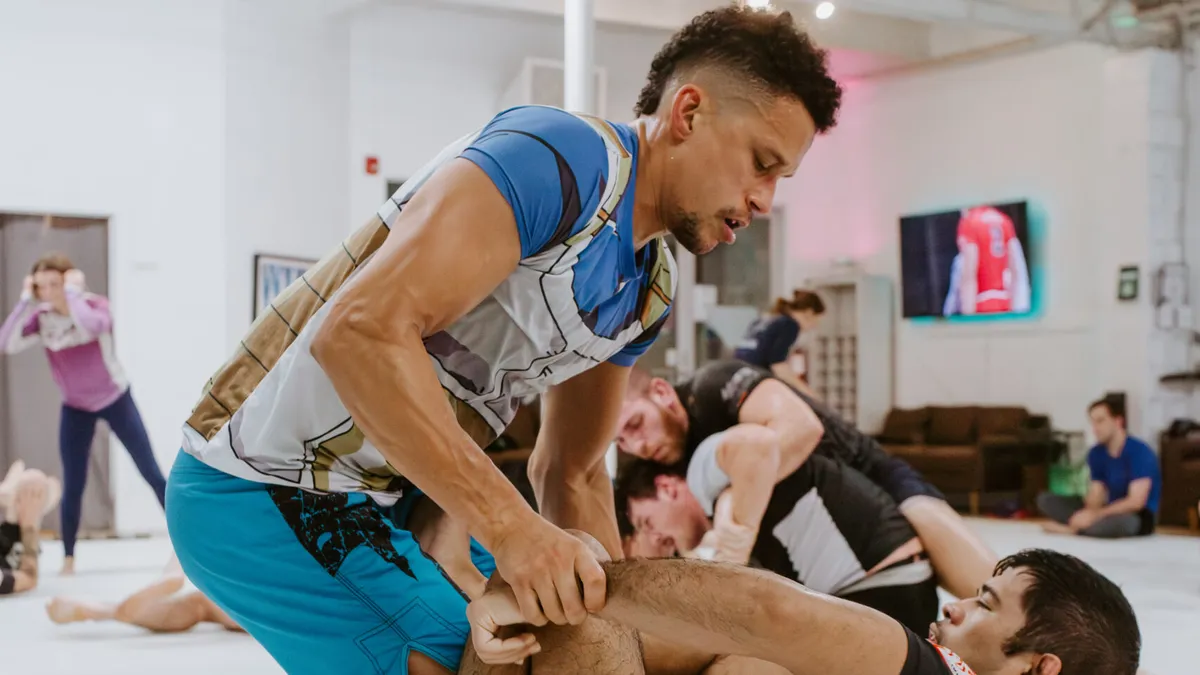
Most people picture self-defense as punches, kicks, and knockouts. Many adults do not want that. You may think, “I do not want to break someone’s nose. I want to be safe and go home.”
Brazilian Jiu-Jitsu (BJJ) gives you a different set of choices. Instead of focusing on hitting, it teaches you how to de-escalate by staying calm, using control, and ending a situation with as little damage as possible. This article explains how de‑escalation works, why control matters, and where BJJ fits for adults who do not want to rely on striking alone.
Why Does BJJ Give More Options?
If you only remember one idea, remember this: BJJ gives you more choices than “hit or get hit.”
You learn how to:
- Create space and leave when you can.
- Tie someone up so they cannot swing freely.
- Escape bad positions if you get grabbed or taken down.
- Hold someone safely until help arrives, instead of knocking them out.
For adults who care about safety, family, and staying out of trouble, this control‑first approach is powerful. If you are new and want an easy way to start, try our Intro to BJJ/101 beginner class.
Why “Just Learn to Punch and Kick" Is Not Enough
Striking skills can help, but many real fights are messy. People grab clothes, push into walls, or fall over chairs. There is often not much room to throw clean punches.
Hitting also brings other problems:
- You can hurt someone badly, or even kill them, with one punch, even if you did not mean to.
- You can break your hand on someone’s head or teeth.
- In a crowded place, a wild punch can hit the wrong person.
- If you throw the first big punch, video and witnesses may see you as the aggressor.
BJJ does not teach that you should never strike. It just gives you tools to manage distance, slow things down, and end the situation with less chance of serious injury or legal trouble.
How Does De‑Escalation Work?
Before any physical move, the best plan is to stop things from becoming a fight at all. That is de‑escalation.
Simple de‑escalation skills:
- Use your voice early. Calm phrases like “I don’t want any trouble,” “Back up, please,” or “I’m leaving now,” said in a steady tone, can slow things down and show others what is happening.
- Keep a safe distance. If someone is upset, you want to stand far enough away that they cannot easily hit your face. Small steps back or to the side can give you room while your hands stay up in a non‑threatening way.
- Know when to walk away. Pride can make people stay and argue. Real self-defense is knowing when to leave, even if someone is trying to embarrass you.
- Use your surroundings. Moving toward staff, friends, or busy, well‑lit areas lowers the chance that things turn into a fight.
BJJ is not the first layer. Awareness and de‑escalation come first. BJJ is there for when your voice and distance are not enough.
How Does BJJ Change Close‑Range Fights?
Many fights start at arm’s length or closer. People grab jackets, push into walls, or rush forward. At that distance, big punches are hard to throw.
BJJ is built for this range. It teaches you how to:
- Break grips and control arms so punches are harder to throw or don't land.
- Use clinches and body ties to take away the other person’s balance.
- Stay safe if the fight hits the ground, instead of turning your back or freezing.
- Use your arms and legs as frames to protect your head and keep space.
Instead of hoping you never end up being grabbed or on the floor, BJJ trains you to know what to do when that happens. This gives you more choices than “swing back harder.”
If you want a bigger overview of positions and control, you can read our article on how BJJ works in real-life self-defense situations.
Control vs Damage: Why Does This Matter for Adults?
As an adult, you are often thinking about more than “winning a fight.” You might worry about your kids, your job, and your health.
Things many adults care about:
- Keeping family members behind you safe.
- Avoiding arrests or court because of a fight.
- Not getting brain or joint injuries from trading punches.
- Not hurting someone more than you intended or needed to.
BJJ gives ways to to protect yourself that focus on control, not damage:
- Clinch and off‑balance. You can close the distance, wrap the body, and make it hard for the other person to swing without falling.
- Take the fight down on your terms. If things must go to the ground, BJJ teaches safer takedowns and how to land in a strong position.
- Use pins and control positions. Positions like mount, back control, and side control let you hold someone down, limit their movement, and talk to them or to others while you wait for help.
- Exit when there is a safe chance. Because you are calmer and more stable, you are more likely to see a chance to stand up and leave instead of staying locked in.
For many adults, these control‑based options feel safer and more responsible than relying only on punches.
How Does BJJ Help You De‑Escalate in Real Life?
Rolling in class may look intense, but it builds soft skills that support de‑escalation.
Regular BJJ training helps you:
- Get used to stress. You spend time in tough spots like being pinned, squeezed, or under pressure, and you learn that you can still breathe and think. This makes real‑world stress feel less scary.
- Control your first reaction. Because you have felt pressure many times, you are less likely to panic or explode when someone steps into your space or grabs you.
- Read body language sooner. You get better at noticing when someone is tense or about to move. Those extra seconds make it easier to step away or set a boundary.
- Practice respect and boundaries. In healthy BJJ rooms, partners tap, stop, and reset on cue. This teaches you to listen to limits: your own and other people’s.
These skills make your words and choices more effective when you are trying to calm a situation down.
Should I Train BJJ or Striking for Self‑Defense?
You do not have to choose only one forever. Striking can still matter. The key is the order you use your tools.
A practical order for most adults:
- Situational awareness and avoidance.
- Verbal skills and de‑escalation.
- Movement, distance, and basic shielding.
- BJJ‑style clinch, control, and escapes when someone grabs you or rushes in.
- Strikes only when there is no other safe option.
With this order, BJJ works as a bridge between “talking” and “hitting.” It gives you tools in that gray area where someone is too close and too aggressive, but you still want to avoid heavy damage if you can.
If you want to learn more about situational awareness, you can check out our article, "Situational Awareness: The #1 Self-Defense Skill".
How Do We Train De‑Escalation and Control at SuperFly BJJ?
Not every BJJ gym trains the same way. Our goal is to build skills real adults can use, not just sport moves.
In our classes, we:
- Teach calm, clear communication. Students talk to partners about pace and pressure, and say something if a round feels too fast. This builds the habit of speaking up.
- Focus on safe entries and exits. We show how to move into clinches and control positions while protecting your head and spine, and how to break away when you can.
- Emphasize tap‑early culture. You learn that tapping is normal. This builds a better sense of limits and risk.
- Connect techniques to real situations. For example, we show how a simple body lock or back control could help you move someone away from a door or hold them until staff arrives, without big strikes.
If you are interested in starting BJJ, we encourage you to check out our Intro to BJJ/101 class.
What Does De‑Escalation‑Focused BJJ Feel Like for a New Adult?
If you are trying to picture your first few months, here is a common progression:
- Month 1: Learn safe positions and how to move without panic.
You learn basic escapes, how to tap, and how to protect your head and neck. The main win is getting used to close contact and still breathing. - Months 2–3: Start to slow things down.
You begin to notice when you can stop someone from moving, hold them in place, or make it hard for them to push or punch. - Months 4–6: Gain real control options.
You can now safely enter clinches, get to a strong position, and decide, do I hold, do I talk, or do I leave?
At every stage, the goal is not to turn you into a brawler. It is to give you calmer, safer choices when things go wrong, and the confidence to keep yourself safe.
Common Questions About BJJ, De‑Escalation, and Striking
Do I have to give up striking if I train BJJ?
No. Many people train both. BJJ just makes sure you have answers in the close‑range and ground parts of a fight, where punches and kicks are hard to use. You can still learn basic striking; BJJ keeps you from having only one tool.
Will BJJ make me more likely to fight?
Most adults find the opposite. As their skill and confidence grow, they feel less need to prove anything. They are more willing to walk away or use calm words because they know they have options if things get worse.
What if I am not strong or athletic?
You do not need to be. BJJ is built around leverage, timing, and technique. Classes can be scaled so you can start where you are and build up slowly. Many students start with basic fitness and improve over time.
Is BJJ safe for older beginners?
Absolutely, with the right approach. We match partners carefully and encourage students in their 30s, 40s, and beyond to set a pace that fits their conditioning. You never have to roll hard to get value from training.
How soon will I feel ready to use this in real life?
You may feel small changes quickly, like staying calmer when someone bumps into you or steps into your space. Deeper confidence builds over months of steady practice. The goal is not to become a hero overnight, but to slowly expand your options.
Ready to Try a Control‑First Approach to Self‑Defense?
If you want more than “learn to punch or kick harder,” BJJ offers a calm way to stay in control in close‑range problems. You learn to de‑escalate, create space, and stay safe, with striking as a last choice instead of your only choice.
You can:
- Visit the gym and watch a class to see how we train control and safety.
- Talk with our coaches about your age, goals, and any past injuries.
- Try a beginner‑friendly Intro to BJJ/101 class and see how it feels to build options for keeping yourself safe.
From there, you can decide how Brazilian Jiu‑Jitsu fits into your overall self‑defense and safety plan as an adult who wants more choices than “hit or get hit.”