
Situational Awareness: The #1 Self-Defense Skill (and Where BJJ Fits In)
Most people think of self-defense as moves: punches, kicks, or a technique they saw in a video. The truth is that the most powerful self-defense skill you can build has nothing to do with techniques. It is situational awareness: how you notice what is happening around you, make decisions early, and avoid problems before they turn physical.
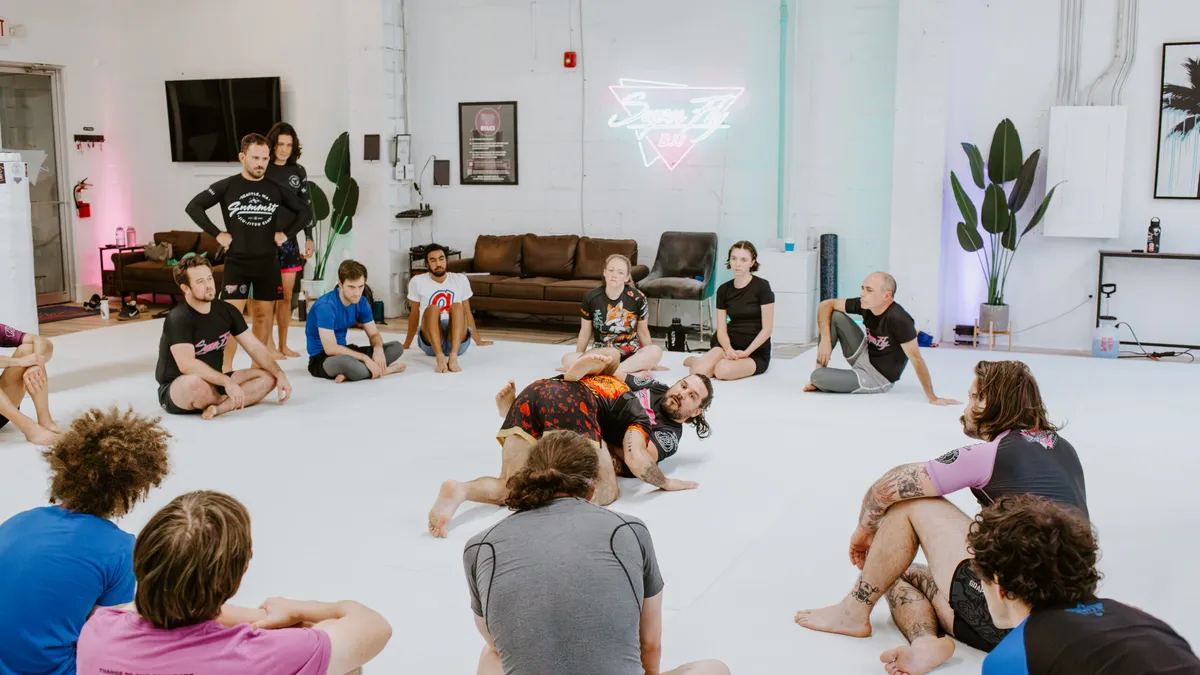
At SuperFly BJJ in Decatur, we teach Brazilian Jiu-Jitsu (BJJ) to adults from neighborhoods like Oakhurst, Kirkwood, Avondale Estates, East Lake, and nearby Atlanta neighborhoods. Over the years, we have worked with hundreds of students who came in “just for self-defense” and discovered that awareness and good decisions are their first line of safety. Physical skills like BJJ are there to support you when those lines are crossed. This guide explains how situational awareness works in everyday life and how training fits into the bigger picture.
Why Awareness Comes Before Any Technique
You can know every move in the world. If you do not see trouble coming, or you ignore early warning signs, you may not get the chance to use any of them.
Situational awareness means:
- Paying attention to your surroundings without being paranoid
- Noticing people, behavior, and changes in your environment
- Making small choices early that keep you away from risk
- Listening to your "gut instinct"
Good awareness can help you:
- Choose better parking spots and walking routes
- Spot someone who is acting “off” before they get close
- Avoid getting boxed into corners or tight spaces
- Decide to leave early when something feels wrong
You will never avoid every problem. Awareness gives you more chances to step out of a bad situation before it turns physical.
Simple Situational Awareness Habits for Everyday Life
You do not need to live in fear to be more aware. A few small habits make a big difference.
- Look up, not just down.
When you walk, spend most of your time looking around instead of at your phone. Scan ahead. Notice who is near you and where exits are. - Limit earbud use in public.
When you walk, limit earbud use so that you can hear someone approach you from behind.
- Know your environment.
In parking lots, note lighting, other people, and where your car is. In restaurants or bars, notice where the doors, staff, and crowded or isolated spots are. - Trust “something feels off.”
If a situation or person makes you uneasy, you do not have to explain it to yourself. It is okay to move, leave, or ask someone to walk with you. - Change your path early.
If you see someone coming toward you and you are not comfortable, cross the street or change direction while there is still space. It is easier to adjust early than to react late. - Protect your personal bubble.
When you are standing in line, on transit, or at an ATM, keep enough space that someone cannot easily get right on top of you without you noticing.
These are simple, quiet behaviors. Most of the time, no one around you will even know you are doing them. They still give you more options and more time.
Boundaries and Decisions Are Also Self-Defense
Situational awareness is not just about seeing danger. It is also about what you do with that information.
Some examples:
- Saying “No, thanks” and walking away when someone will not respect your space
- Choosing to leave a bar or party instead of arguing with someone who is getting louder or more aggressive
- Asking a friend, staff member, or security guard to walk you to your car
- Calling a rideshare rather than walking alone if something feels wrong
These choices may not feel like “self-defense,” but they are. Every time you choose a safer option early, you lower the chance that you will ever need physical skills.
Being clear about your boundaries also makes it easier to act with confidence if someone crosses them.
When Awareness Is Not Enough
Even with good habits, life can still surprise you.
Situations where awareness sometimes is not enough:
- Someone you already know suddenly becomes aggressive
- You are cornered or trapped in a space you cannot easily leave
- You notice the problem, but you do not have time or room to get away
- You get grabbed or taken down before you can react
This is where physical training becomes critical. It does not replace awareness. It backs you up when awareness and good choices are not enough.
You can think of it like layers:
- Awareness and boundaries
- Decisions about where to be and who to be with
- Verbal skills and de-escalation
- Physical skills when there is no other option
Brazilian Jiu-Jitsu lives in that fourth layer. It gives you tools for the moments when someone is already too close, and things have turned physical.
How Brazilian Jiu-Jitsu Supports Real Self-Defense
Brazilian Jiu-Jitsu is a grappling art. Instead of punches and kicks, it focuses on close-range control, escapes, and ground situations.
In the context of situational awareness and self-defense, BJJ helps you:
- Stay calm when grabbed.
Training puts you in many controlled situations where people grab or hold you. Over time, that feeling becomes familiar instead of shocking. - Escape bad positions.
You learn how to get out from under someone, off a wall, or out of tight clinches using leverage instead of strength. - Control someone without striking.
If you need to keep someone from hurting you or another person, you can use pins and control positions to hold them until help arrives. - Build confidence in your body.
Knowing you have handled pressure on the mats makes it easier to trust yourself and your decisions off the mats.
Physical skills do not replace awareness. They give you a safety net for times when awareness cannot prevent the situation from becoming physical.
How We Train Awareness and Self-Defense at SuperFly BJJ
At SuperFly BJJ in Decatur, we do not claim to have a magic move that fixes everything. Our approach is:
- Teach situational awareness and smart decision-making as the first line of defense
- Use BJJ training to build calm, control, and escape skills when things get close
- Emphasize safety, responsibility, and avoiding unnecessary harm
Most of the physical self-defense training for adults happens through:
- Intro to BJJ/101 – a beginner program where you learn core positions, simple escapes, and how classes work, with no pressure to go harder than you are ready for.
- Adult Fundamentals – classes that build reliable basics, timing, and controlled live training so techniques work under pressure.
- Intermediate/Advanced – for students who want deeper skills and more challenging rounds once they have a foundation.
If you tell us that self-defense is your main goal, coaches can help you connect specific drills and positions to real-world situations so you understand why they matter.
Putting It Together: A Realistic Self-Defense Plan
You do not have to choose between awareness and training. The strongest plan uses both.
A simple, realistic path might look like this:
- Start by improving your situational awareness and boundaries in everyday life
- Learn to notice early warning signs and trust your instincts
- Add physical training like BJJ to give you options when you cannot avoid contact
- Check in with yourself over time and update your habits as your life changes
Even if you never set foot on the mats, building better awareness and decision-making will improve your safety. If you do decide to train, that foundation will make your physical skills even more effective.
Situational Awareness and BJJ – Common Questions from Adults in Decatur
What is situational awareness in self-defense?
Situational awareness means paying attention to what is happening around you so you can notice problems early and make safer choices. It is not about living in fear. It is about being present, noticing people and changes in your environment, and acting before a situation gets worse.
How can I practice situational awareness every day?
You can practice by looking up from your phone, being present by not drowning out the world around you with earbuds, scanning where you are, and noticing exits and people. When something feels off, you can choose a different route, move closer to others, or leave. These small habits become easier over time and do not require special equipment.
Can situational awareness replace self-defense training?
Awareness and good decisions are your first and most important tools. They can prevent many problems. But they cannot guarantee that nothing bad will ever happen. Physical training, like BJJ, gives you options for the times when you cannot avoid contact or get away.
Do I need BJJ if I already feel very aware?
If you are already good at reading situations, that is a huge advantage. BJJ adds another layer. It helps you stay calm if someone grabs you or takes you down and gives you practical ways to escape or control someone if you have no other choice.
I am nervous about contact. Is BJJ still an option?
Many adults feel nervous about close contact at first. A good BJJ gym will let you start slowly, with simple drills and patient partners. You do not have to jump into hard sparring. You can build comfort over time, at your own pace.
Ready to Explore Self-Defense in Decatur?
If you are in Decatur or nearby Atlanta neighborhoods and you have been thinking about self-defense, start with awareness. Look up a little more. Trust your gut. Make small, safer choices early.
When you are ready to add physical skills:
- Visit SuperFly BJJ and watch a class
- Talk with our coaches about your goals and any concerns
- Try a beginner-friendly session and see how BJJ feels for you
From there, you can decide how Brazilian Jiu-Jitsu fits into your overall self-defense plan, on top of the most important skill you already have: your ability to see what is happening and make good choices before it is too late.
If you are interested in learning how to physically defend yourself, you can view our Brazilian Jiu-Jitsu program offerings here.